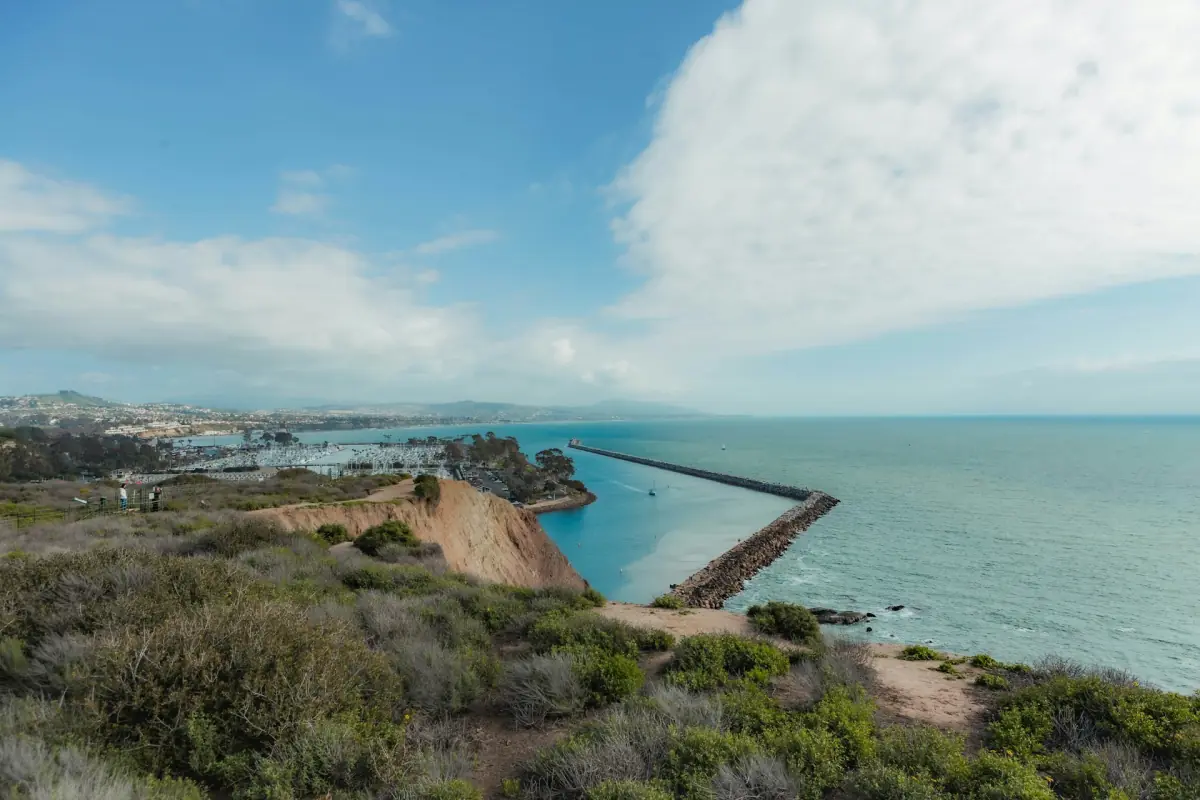
Dana Point weather and the coastal climate
Dana Point weather planning works better when the activity comes before the month. A whale-watching trip, a paddle in the harbour and time on the beach each depend on different conditions. Use seasonal averages to choose a broad travel period, then use the forecast and local notices to shape the actual day.
Nearby Laguna Beach provides the coastal reference for the NOAA climate normals covering 1991 to 2020. These are averages from a neighbouring station, rather than a forecast for Dana Point. Mean daily maximum and minimum temperatures are 20.2°C and 6.8°C in January, compared with 27.3°C and 16.2°C in August. September remains relatively warm in this series, with a mean daily maximum of 27.2°C.
Those figures help with packing and broad comparisons between seasons. For a particular morning on the water, use the local forecast and conditions. Keep an alternative on land and use the excursion overview to decide which activity deserves the most flexibility in your itinerary.

Whale species and seasonal windows
Dana Point whale watching season depends on the species you hope to see. Local operator guidance places the main gray whale season in December to April, with the first animals possible in November. Plan around that main window without assigning a fixed arrival date to migrating wildlife.
Blue whales have a different local operator window, May to November. Wildlife opportunities across the year therefore mean changing possibilities, rather than the same animals on every departure. Sightings and particular species remain uncertain even when a visit falls within the usual seasonal window. Compare the boats and their included features on the whale-watching page.
Choose the season around the animal interest that matters to you, but keep the boat choice practical too. Time on the water, the vessel experience and the rest of your day's plans still matter. A seasonal calendar is a useful starting point for a wildlife trip, rather than a promise of what will appear.
Paddleboarding in the harbor
Our take: This private guided outing includes a paddle board and life preserver for time on the harbor water.
Hand-picked tours, booked through GetYourGuide. Prices are indicative starting prices in US dollars (as of November 2026). Tap a tour for live availability and the current price in your currency.

Guided private paddleboarding in the harbour
A weather-dependent harbour activity with a guide, paddleboard, life preserver and bottled water, for a visit shaped around conditions.
Paddling and beach time according to conditions
Dana Point paddling and beach visits need suitable local conditions as well as a convenient date. The private guided SUP activity lasts 1.5 hours and includes a paddleboard, life preserver and bottled water. Treat the outing as a guided harbour session when arranging your day, with the weather influencing the plan.
Coastal water quality needs separate attention after rain. Affected waters can be unsuitable for at least 72 hours, and runoff areas, streams and their mixing zones should be avoided. Follow local notices and lifeguard advice rather than taking a clear-looking sea as a bathing clearance. The beach guide explains the different coastal settings.
Air temperature and water temperature answer different questions. La Jolla supplies a regional water-temperature comparison farther south; it is a different location from Dana Point and the harbour. Use that distinction when deciding what to pack for water activities, and give the conditions at the actual launch or swimming area priority.
Festival dates and winter walking access
The Festival of Whales is scheduled at Dana Point Harbor for 5 to 7 March 2027. The announced themes include marine education, live music, a makers market, a car display and family activities. Plan the individual events, boat outings and parking as separate parts of a festival visit.
The Headlands Preserve Trail has a dated winter access notice from 8 September 2026 naming Tuesday, Thursday, Saturday and Sunday as access days. The winter notice dated 8 September 2026 gives opening hours of 08:00 to 16:00 and no season-end date. Check the current access notice before travelling. That notice concerns the Preserve Trail and should not become a single timetable for every coastal park.
Headlands paths can also close after substantial rain for up to 72 hours, depending on drying conditions. Use the Headlands walking guide for the trail setting and keep a harbour-based alternative in the plan. A dry-season expectation or a guided booking does not replace the access arrangements applying on the day.
Questions about timing a Dana Point visit
When is the main gray whale season?
December to April is the main gray whale season in local operator guidance, with first animals possible in November. That window helps choose a travel period, while sightings still depend on wildlife and conditions. Blue whales have a different operator window, so match the season to your interests.
Is August warmer than January?
Yes, the neighbouring Laguna Beach climate normals show August warmer than January. For 1991 to 2020, the mean daily maximum is 27.3°C in August and 20.2°C in January. These are coastal reference averages, rather than a forecast for your Dana Point dates or a statement about water conditions.
Can I plan water activities immediately after rain?
Water activities in Dana Point need local advice after rain because affected coastal waters can be unsuitable for at least 72 hours. Avoid runoff areas and follow notices for your actual location. Keep a land activity available rather than making a fixed swimming or paddling plan around the weather clearing.